The Legacy Question Your Brokerage Needs to Answer


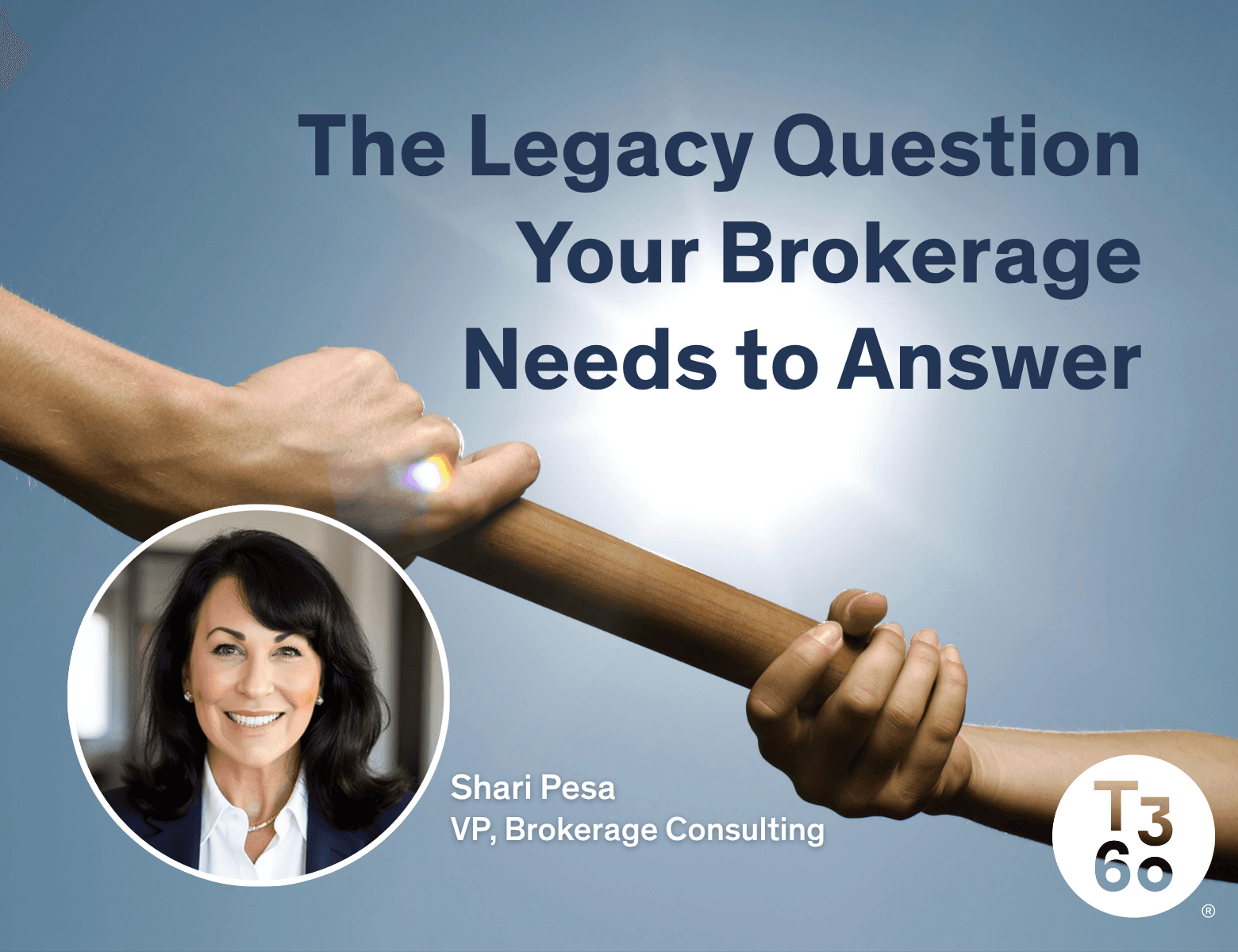
Most brokerages are heading toward the same demographic shift. Your highest-producing veteran agents are weighing exit timelines, while rising talent asks about long-term career progression. As a brokerage leader, you are left evaluating how to protect core revenue streams when key agent businesses transition over the next several years.
Succession planning addresses both challenges, provided it is framed correctly and built into the culture.
Leading with Legacy, Not "Retirement"
When engaging veteran top producers, language matters. Retirement is rarely a word that resonates with real estate professionals. Reframe the dialogue around legacy.
They have spent decades building trusted client relationships and market reputation. The objective is helping them protect what they created while ensuring clients remain cared for on their terms.
To set up a successful hand-off, brokerage leaders should help veteran agents focus on three essentials:
Data Organization: Transitioning a database requires a clean, active CRM with organized history so a successor can step in without losing client trust.
Matching Personas: Identifying the right successor means finding someone whose work ethic, communication style and values align with the veteran agent's brand.
Clear Deal Structure: Establishing clear financial terms up front, such as earn-outs over 18 to 36 months, protects both parties and maintains alignment.
Positioned correctly, this shifts the mindset from stepping down to stepping into a mentorship role that preserves client trust and secures residual income over time.
A Powerful Outside Recruiting Engine
While looking internally for successors is natural, succession planning is also a targeted outside recruiting tool.
Across every market, productive agents can feel stuck with little support or pay for coaching that does not fit their business.. Offering a structured pathway to success changes your recruiting proposition entirely. Instead of selling standard split structures, you offer promising recruits direct access to established leaders, hands-on mentorship and a clear timeline to inherit an active client base.
As a brokerage leader, you need to evaluate individual needs. Agents who already close deals do not need to give up commission for a mentor, but those seeking real direction now have a compelling reason to join your firm.
Five Steps to Build Succession into Your Culture
Look Beyond Your Walls: Seek out talented external agents who need real mentorship and are ready for a structured environment.
Systematize Knowledge: Document the veteran agent's core processes so business equity lives in the system, not just in their head.
Establish Realistic Timelines: Set two- to four-year transition milestones so everyone has complete clarity.
Draft Terms Early: Outline financial structures and earn-outs in advance to prevent friction later.
Track Metrics: Monitor client retention and revenue progression throughout the transition period.
Succession planning is fundamentally about protecting what your top producers have built while giving the next generation a clear reason to grow with your company. Brokerages that master these white-glove conversations today will secure their revenue, retain their best talent and lead the market tomorrow.
If you need assistance navigating these delicate conversations, outlining the right transition structures or building a seamless succession culture tailored to your firm, reach out to the T3 Sixty Brokerage Consulting team to start the conversation. Schedule time now

VP, Brokerage Consulting
Shari Pesa brings more than 20 years of sales, leadership, and brokerage growth expertise to her role as vice president, brokerage consulting at T3 Sixty. She previously served as vice president of strategic growth for Anywhere Holdings Corp., where she worked across leading brands including Coldwell Banker and Sotheby’s International Realty.