5 Themes Emerge from the T3 Leadership Summit


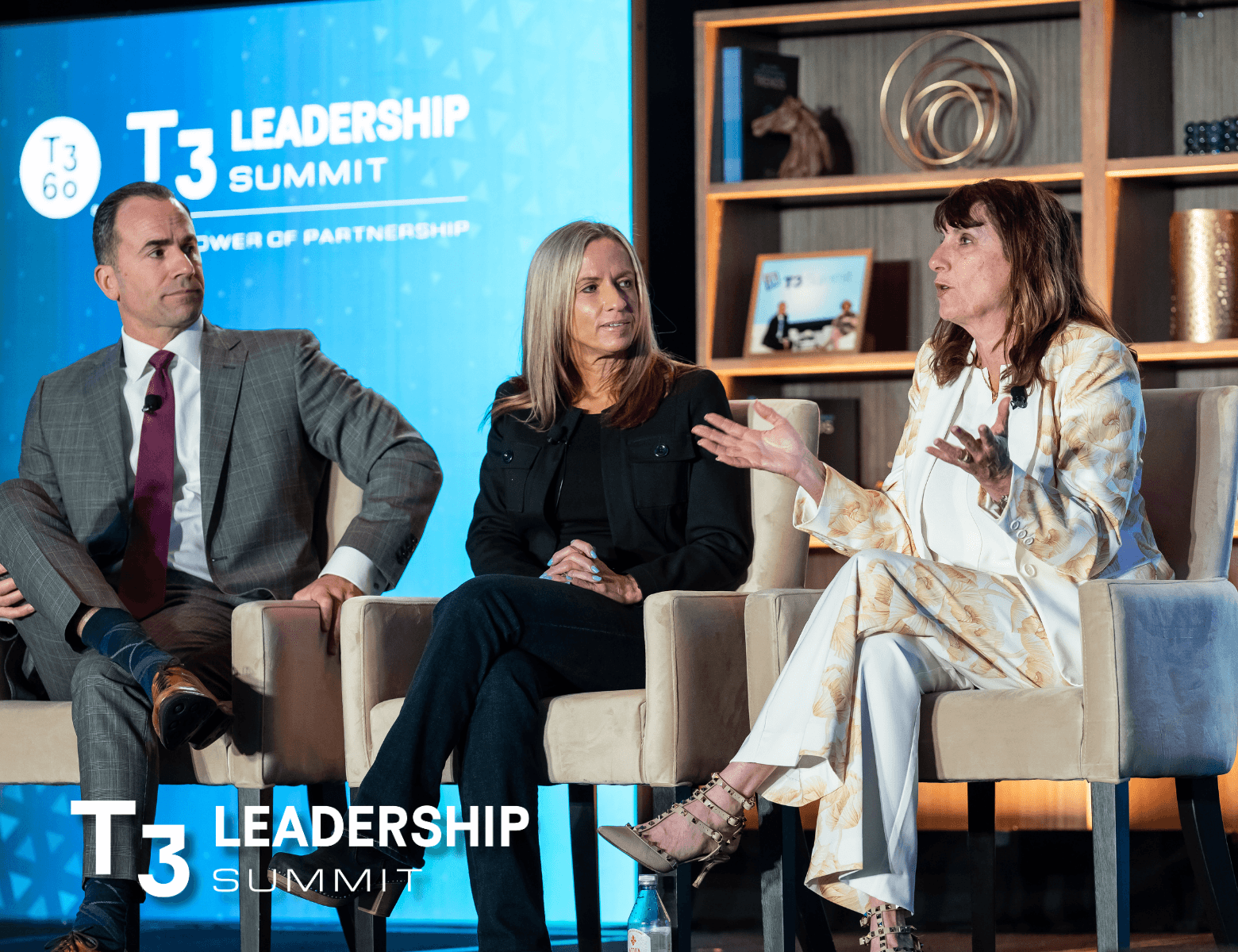
The 2026 T3 Leadership Summit featured leaders from the nation’s largest brokerages, franchise organizations, portals, MLSs and industry associations. The audience itself reflected the broader real estate ecosystem, including independent brokerage leaders, regional firms, teams and technology companies from across the industry.
While many of the conversations focused on challenges facing large national organizations, the broader themes that emerged from the Summit offered important insights for brokerage leaders of all sizes, business models and brands. In many cases, the takeaways were especially relevant for independent and mid-sized firms navigating a rapidly changing market.
1. Brokerage Models Are Fragmenting and That Creates Opportunity
The traditional brokerage model continues to evolve as agent expectations shift. Increasingly, agents are looking for flexibility rather than one-size-fits-all offerings.
Some agents are highly focused on splits and unit economics, while others are focused on long-term business growth. These priorities often shift throughout different stages of an agent’s career.
At the same time, culture and operational support are becoming differentiators again. Agents want more than basic training and a technology stack. They want continuous coaching and scalable systems that allow them to operate more like entrepreneurs. Many agents are also more focused on promoting their personal brand than the brokerage brand, forcing brokerages to rethink how they create value and strengthen affiliation.
As brokerage models continue to diversify, recruiting must become more strategic. The goal is no longer simply attracting more agents, but understanding which agents are the right fit for a brokerage’s culture, support model and value proposition.
To remain competitive and relevant, brokerages should focus on:
Building a true business platform instead of simply offering a menu of tools
Supporting team formation and business expansion
Delivering scalable lead-generation and conversion systems
Positioning the brokerage as a business performance partner, not just a service provider
2. Data Ownership Is Becoming a Strategic Leadership Issue
Another major theme throughout the Summit was data ownership and the ongoing debate around exclusive listings.
For small- and mid-sized brokerages, the more important question may be: Who controls the customer relationship?
As technology platforms, portals and AI tools become more integrated into the transaction process, brokerages need to think strategically about where their customer data lives, who owns the consumer experience and how dependent they are on third-party platforms.
The firms that build strong first-party consumer relationships and maintain control over their databases, lead generation and client engagement strategies will be in a far stronger position moving forward. If you rely entirely on portal leads, the portal owns the customer relationship and your brokerage is essentially renting access to it. On the flip side, if you invest in your own local content strategy marketing and lead nurturing, you build a relationship with customers over time.
This is no longer simply a technology conversation. It is a long-term competitive strategy conversation.
3. The Hispanic Market Represents a Significant Growth Opportunity
Another important conversation focused on the continued growth of Hispanic homeownership demand.
Hispanic consumers remain one of the fastest-growing segments of the housing market, and demographic shifts should increasingly shape recruiting, marketing and leadership strategies across the industry.
For local and regional brokerages, this represents a significant opportunity. Community connection is often one of the greatest strengths of independent firms, and organizations that build authentic relationships within growing communities today will be better positioned for long-term growth tomorrow.
This is not simply about diversity. It is about future market alignment.
Brokerages that invest in culturally relevant leadership, recruiting and community engagement strategies now will likely create stronger competitive positioning over the next decade.
4. Differentiation Matters More Than Scale
While large firms discussed exclusivity as a competitive strategy, the broader takeaway for many brokerages is the growing importance of differentiation.
Consumers need clearer reasons to choose one brokerage over another. What is your unique value proposition?
That differentiation may come through:
Deep local expertise
Niche specialization
Hyperlocal marketing
Community relationships
A clearly defined client experience
For many independent and mid-sized firms, competing directly on scale is unrealistic. Competing on relevance, relationships and specialization is far more attainable and potentially far more effective.
5. Leadership Agility Is Becoming a Competitive Advantage
Across nearly every conversation at the Summit, one underlying theme remained constant: uncertainty.
Brokerages are navigating commission pressure, technology acceleration, AI disruption, shifting consumer expectations and broader market unpredictability all at the same time. It is important for leaders to understand which agents are profitable, which services drive retention, what expenses create measurable value and where the company is overserving without a return.
In this environment, leadership agility becomes a competitive advantage.
Smaller and mid-sized independently owned brokerages have the ability to pivot faster, communicate more clearly and maintain stronger cultural alignment than larger organizations. Those advantages matter in periods of rapid industry change.
The conversations at this year’s T3 Leadership Summit made one thing clear: the future of brokerage will not be defined by a single model, strategy or technology platform.
Success will belong to organizations that remain adaptable, differentiated and deeply connected to both their agents and consumers, and their community.
For independent and mid-sized brokerages, that creates real opportunity.
For brokerage leaders, now is the time to ask important strategic questions: Are you building a platform that truly helps agents grow, or simply offering tools? Are you recruiting the right agents for your model and your culture? Are your systems strengthening your direct relationship with consumers, or increasing dependence on third-party platforms? The firms that evaluate and adapt intentionally will be best positioned for long-term growth. Reach out to me at lisa@t3sixty.com or use this link to schedule a complimentary consultation.

Senior Vice President, Brokerage and Teams Consulting
Lisa is responsible for overseeing the delivery and administration of brokerage and team consulting programs at T3 Sixty, with a focus on growth, streamlining operations, optimizing recruitment and retention efforts, and implementing effective marketing strategies. She brings a wealth of experience to the role having founded, grew and eventually sold an independent boutique brokerage. Before joining T3 Sixty, Lisa held the position of global vice president, lead affiliate services at Sotheby’s International Realty.