T3 Sixty Organized Real Estate Insiders Spotlight: ABoR-Unlock MLS


When we think about the real estate industry, we often default to market cycles, interest rates and transaction volume. It’s a business defined by data and deals. Yet the most important leadership lessons emerging from today’s real estate executives have surprisingly little to do with the market itself.
They’re about intuition, they’re about navigating disruption without losing trust and they’re about the often-overlooked responsibility organized real estate has to the communities it serves.
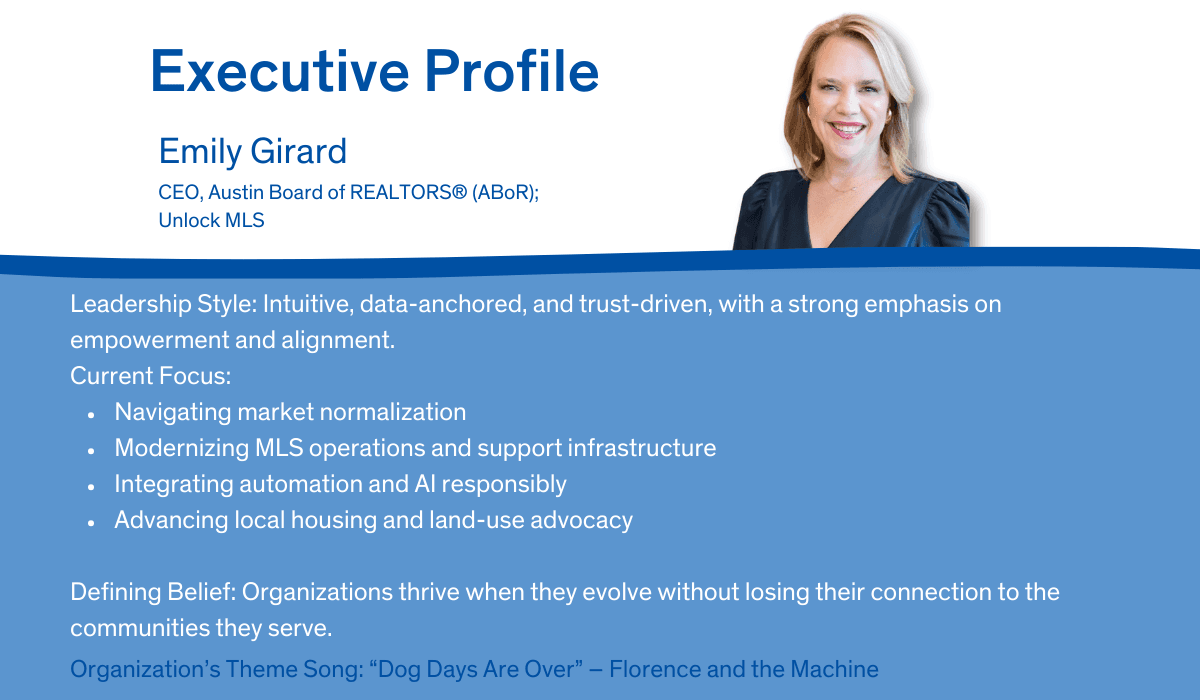
In a candid conversation, Emily Girard, CEO of the Austin Board of REALTORS® (ABoR) and Unlock MLS, shared a set of leadership insights that extend well beyond listings and sales contracts. Leading both a professional trade association and its wholly owned MLS technology subsidiary places her at the intersection of people, policy, data and infrastructure—exactly where many organized real estate leaders now find themselves.
What follows are the most practical and surprising takeaways from that conversation—lessons applicable to association executives, MLS leaders and volunteer leadership navigating an increasingly complex landscape.
Leadership Isn’t Just Data—It’s Intuition Anchored by Data
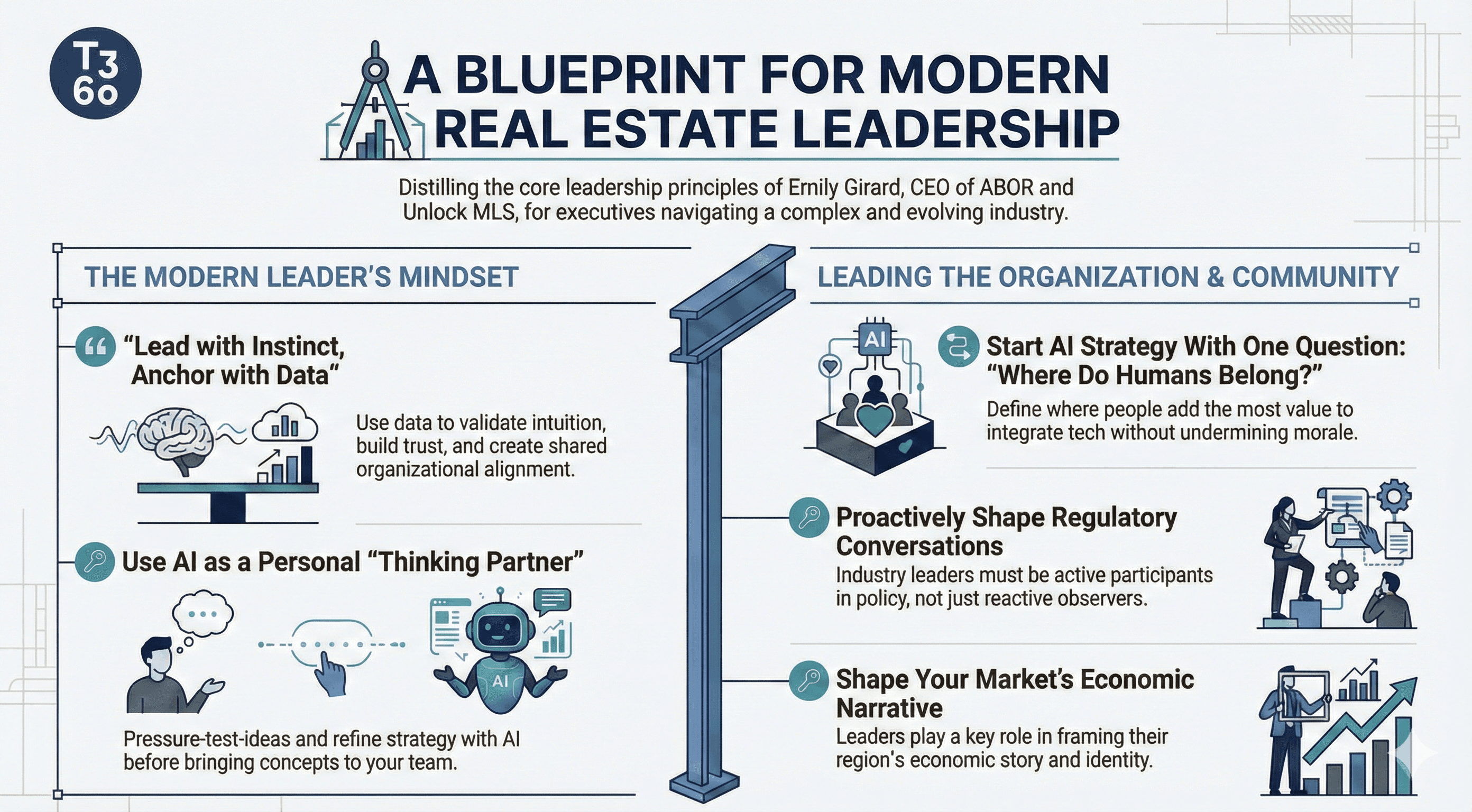
In an industry increasingly obsessed with being “data-driven,” Emily describes herself as an intuitive leader, which is refreshingly honest—and more sophisticated than it sounds. She doesn’t reject data. She uses it as an anchor.
“I lead with instinct—but data is what makes that instinct shareable.”
Data serves as a reality check, helping her validate what she feels and translate instinct into a shared direction the organization can align around. That grounding is critical not just for strategy, but for trust—especially when leading teams through change.
This approach allows her to empower others with decision-making authority. When a decisive, top-down call is required—the proverbial “fourth down”—her team trusts it, knowing the decision has been pressure-tested both intuitively and analytically.
The Industry’s Blind Spot: Regulation Still Matters
Despite recent high-profile legal challenges, she believes organized real estate is still underestimating the long-term impact of regulation.
“I think MLSs sleep on the regulatory aspect of our business.”
She points to policy decisions at the federal level—particularly within HUD—as shaping the future stability of housing markets and the broader value of homeownership itself. These decisions, she argues, require industry leaders to be proactive participants, not reactive observers.
This isn’t just about compliance. It’s about reminding policymakers—and the public—why homeownership has mattered for generations and how it contributes to economic resilience and community stability.
Leadership Means Shaping the Economic Story of Your Market
In Austin, housing affordability began to creep into conversations about economic growth and business recruitment. As the market cooled after a decade of outsized performance, the narrative mattered as much as the numbers. Emily’s role evolved accordingly.
Through engagement with Opportunity Austin, the region’s economic development organization, her leadership extended beyond organized real estate into shaping how the city explained its own evolution. Market deceleration wasn’t a failure—it was a recalibration toward sustainability.
This work underscores a broader truth: organized real estate leaders increasingly play a role in shaping their region’s economic identity, not just reacting to it.
The Smartest AI Strategy Starts With One Question: Where Do Humans Belong?
While many organizations rush toward automation, Emily’s approach begins somewhere else entirely.
“Where do humans belong, and where should AI belong?”
That question now drives internal discovery, performance metrics, and operational redesign at Unlock MLS. The goal isn’t efficiency alone—it’s clarity of purpose. By defining where people add the most value, the organization can integrate technology without undermining morale or identity.
This human-first framework directly addresses the unspoken fear many teams carry: replacement. Instead, it reframes technology as an amplifier of human expertise, not a substitute for it.
A Modern Leadership Hack: AI as a Thinking Partner
Perhaps the most unexpected insight is how she uses AI personally.
She describes ChatGPT as a “running partner” for her thinking—a private space to pressure-test ideas, explore counterarguments and refine strategy before bringing concepts to her team or board.
“I set parameters so it gives me direct, honest feedback and real pushback.”
It’s a practical example of how modern leaders can use AI not just for productivity, but for intellectual rigor—creating better decisions without organizational noise.
Looking Ahead: Leadership With a 100-Year Lens
As the Austin Board of REALTORS® approaches its 100-year anniversary, Emily’s leadership philosophy takes on added weight. In a city famous for producing national brands that outgrow their roots, ABoR has remained local—intentionally tethered to the community it serves.
That perspective shapes everything from land-use advocacy to technology strategy. It’s a reminder that longevity in organized real estate isn’t about resisting change—it’s about evolving without losing purpose.
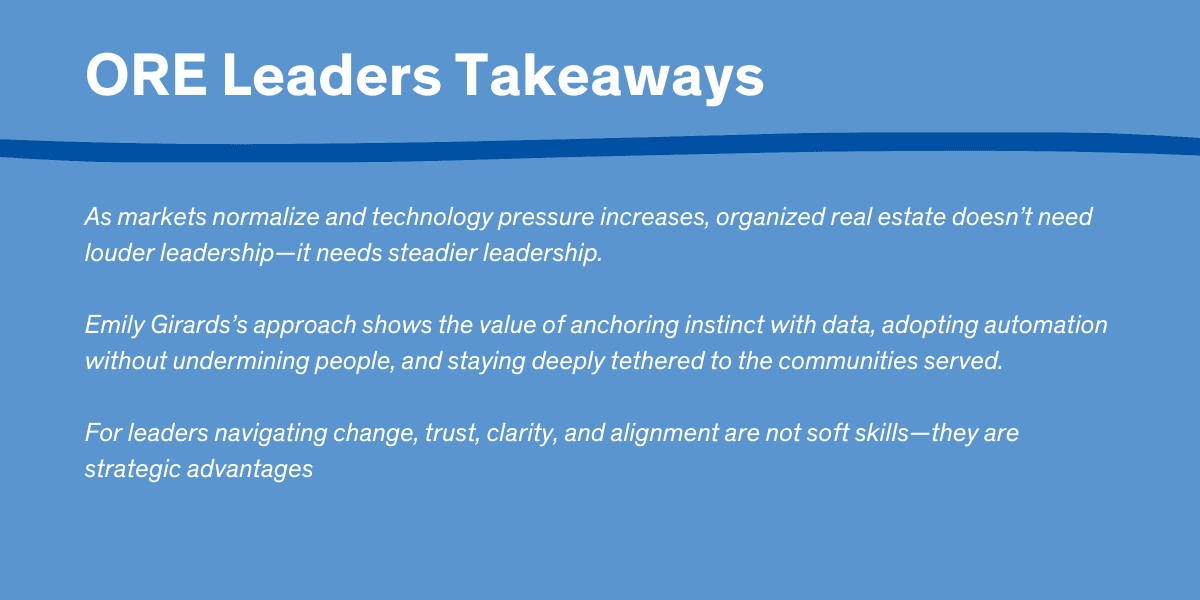
The broader lesson for organized real estate leaders is clear: Balancing intuition with data, embracing technology without sacrificing people, and staying grounded in community are not abstract leadership ideals. They are the foundation of relevance and resilience in a rapidly changing industry.
The question isn’t whether change is coming. It’s whether leadership is steady enough to guide it—and intentional enough to shape what comes next.