Four Forces Reshaping ORE


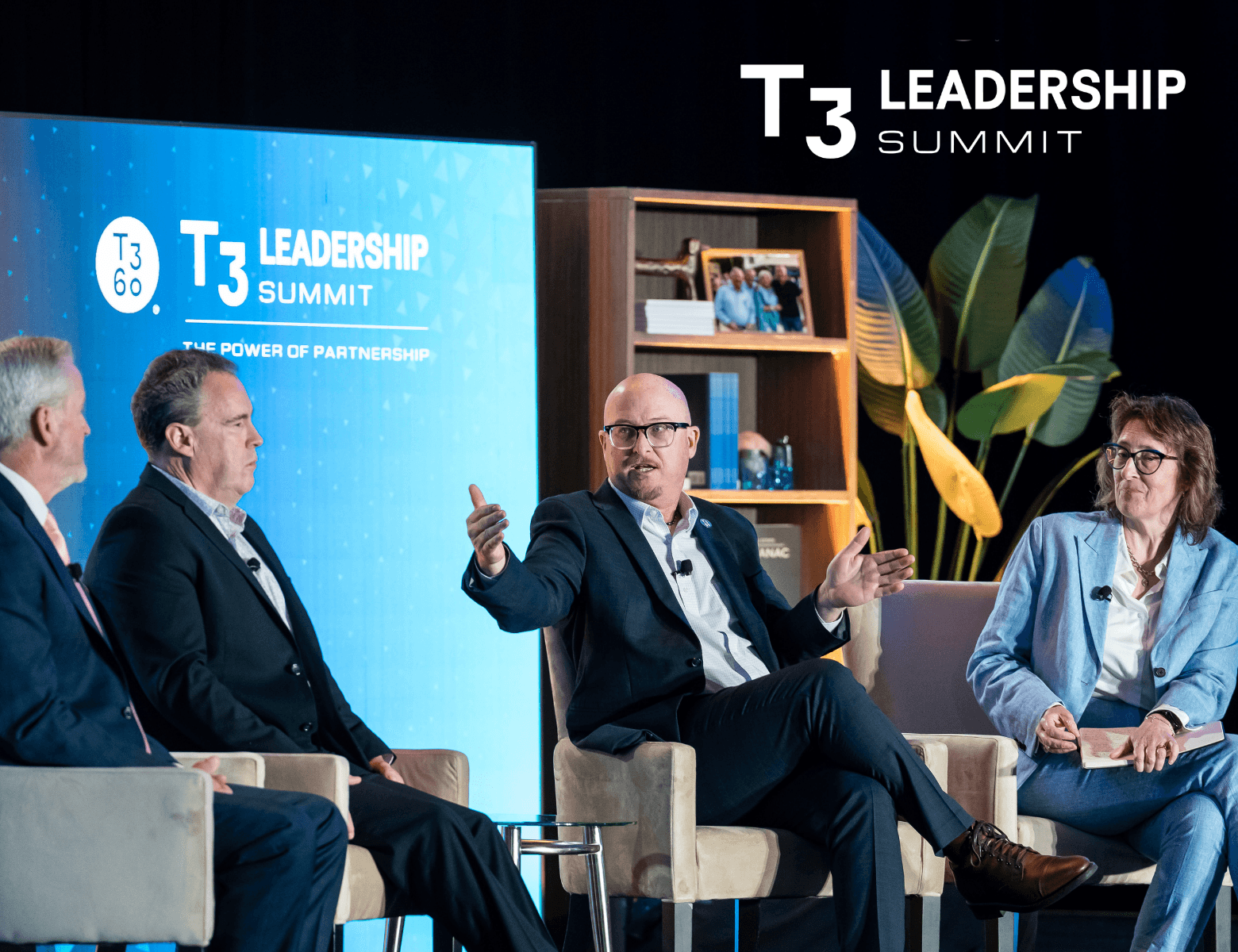
Every year, the T3 Sixty Leadership Summit brings together the most senior executives in residential real estate for two days of candid, off-the-record conversation about where the industry is heading. This year’s gathering in Orlando featured roughly 400 leaders from brokerages, portals, MLSs, associations and technology companies.
The event surfaced fault lines — real, structural and accelerating, that will shape the operating environment for every MLS and REALTOR® association in the country over the next several years.
Our team produced a detailed Intelligence Report for ORE Insider clients covering every consequential session from the Summit, with audio, video and slide companions for leadership team use. Here is a high-level look at the four themes that defined the event.
1. The Listing Exposure Battle
No topic consumed more oxygen at the Summit than the fight over who controls listing exposure and under what terms. Major brokerage leaders, portal CEOs and MLS executives took the stage with competing visions for how listings should reach the market. What emerged was not a single debate but a coalition-and-counter-coalition dynamic, with clear strategic camps forming around fundamentally different views of the MLS’s role.
For MLS and association leaders, the implications are immediate: the absence of clear, well-enforced local policy is precisely what creates the opening for external actors to fill the void. Organizations with strong coming-soon and pre-marketing frameworks are far better positioned than those still deliberating.
2. The AI and Data Infrastructure Imperative
While the listing exposure debate dominated the headlines, a quieter and arguably more consequential conversation ran underneath it: the battle over data in an AI-driven world. Multiple panelists pointed to the same uncomfortable truth: The industry has been losing strategic control of its data for years, and the emergence of AI models trained on housing information makes reclaiming that control more urgent and more difficult.
The Summit surfaced new frameworks for how MLSs might reassert their position, not by retreating behind walls but by actively promoting the MLS as the authoritative source of verified housing data. The message was clear: The organizations that shift from a posture of preservation to one of active promotion will be the ones that remain central.
3. NAR Stabilization
NAR’s CEO delivered one of the most operationally substantive sessions of the Summit, offering a look at the organization’s transformation, from governance restructuring and zero-based budgeting to a relaunched MLS Advisory Board and a new posture on state and local engagement. The message to MLS and association leaders: the era of top-down policy direction from NAR is evolving, and local organizations now carry more of the strategic and legal responsibility than they have historically.
Our full report unpacks what has actually changed, what the de-risking strategy means operationally and what local leaders should be doing in response.
4. The Vertical Integration Accelerator
The integrated consumer experience, search, mortgage, title and servicing delivered as a single platform, is no longer theoretical. Multiple major players presented fully developed visions for end-to-end consumer platforms, each with different implications for how MLSs and brokerages participate in (or get sidelined from) the transaction. The Summit made clear that this infrastructure is being built now, at scale, and that MLS leaders need to understand the terms of participation before partnership conversations arrive at their door.
These four forces are not independent; they are feeding each other. The listing exposure battle is accelerating the data governance conversation because every new distribution channel creates new questions about who controls the information flowing through it. NAR’s evolving posture means local MLS and association leaders own more of the strategic response than they ever have. The vertical integration underway by the industry’s largest players is reshaping the competitive landscape in which all of these decisions will play out. For ORE leaders, the challenge is not picking which force to respond to. It is recognizing that your response to any one of them shapes your position on all of them.
The ORE Insider Client Advantage
The full Intelligence Report is available to ORE Insider clients, along with ongoing analysis of the policy shifts, competitive dynamics and structural changes shaping the MLS and association landscape.
If you’d like to compare notes on where your organization is in its planning cycle and where the highest-leverage opportunities are for 2027, schedule a strategic planning consultation with T3 Sixty. Thirty minutes now can change how your entire year unfolds.